
Innovative Solutions
——————————————————————————————–
Conventional toothbrushes and their negative impact on environment
Ayoub Hameedi
Dental hygiene is a pertinent part of our daily lives. The first and the last thing we normally do in a day is we brush our teeth’s. But do we know that it has a very big negative impact on our marine environment. As per Dental Tribune International, 1 billion toothbrushes are thrown in trash bins each year in United States. Likewise, according to the National Geographic’s estimation, if people across the globe would change their toothbrush once every three to four months, it would be a whooping 23 billion tooth brushes per year that would end-up in trash bin. This huge amount of plastic waste are chocking our oceans and damaging their fragile ecosystems. Unfortunately, there could be more plastic in our oceans (by weight) than fish by the mid of this century. According to United Nations Environment Programme (UNEP), an estimated 75 million – 199 million tonnes of plastic waste is now floating in our oceans. This plastic waste is wrecking havoc on sea birds and other forms of marine life. Again as per United Nations (UN), plastic waste kills a million sea birds each year. Adding insult to injury, plastic waste also kills 100,000 sea mammals, marine turtles and innumerable fish every year. So we can understand the negative impact of plastic waste on marine life in specific and on our marine ecosystem in general. According to United Nations (UN), plastic waste takes 20 – 500 years for decomposition and even after that it does not disappear. In-fact, larger pieces of plastic then get transformed into micro plastic. United Nations say that we ingest a credit card worth of plastic each week. It is our mutual responsibility to do what we can to put a dent in plastic waste curve. It is extremely crucial for us as consumers. An important question that would arise here is do we have any alternative that we can use instead of a plastic toothbrush and this is what this short report is all about.
The Humble Co is a Swedish company that has developed a toothbrush made completely from bio-degradable bamboo and plant based material. This unique feature makes humble toothbrush stand out from conventional plastic-based toothbrushes that takes few hundred years to break down once ended either in landfills or in oceans. As per the Humble Co, handle of their toothbrush is made completely from bio-degradable bamboo. The bristle in their toothbrush is also made of 65% plant-based material. The package for toothbrush is based on cardboard and the inside bag is comprised of 90% paper and 10% cellulose. Other than the toothbrush, the Humble Co has also launched biodegradable bamboo based cotton swabs along with flossing tools that are made from 53% plant based material and packed in packaging that can be recycled afterwards. As per British Government, in England alone people use 1.8 billion plastic based cotton buds each year for hygiene purpose. Altogether, that’s 18 billion plastic stemmed cotton buds in a decade from England alone. Now imagine, if one-third of these cotton buds would end-up as waste in our oceans that would mean 6 billion plastic stemmed cotton buds in a decade. This single fact can help us in understanding the magnitude of plastic waste problem in our ecosystem. Consequently, our ocean floors are rapidly turning from coral reefs heaven to nothing but plastic waste graveyard. The video given below is an intellectual property of The Humble Co.
Summing up all, minor choices in our daily routine matters a lot. Choosing either a plastic based toothbrush or sustainably produced bamboo based toothbrush is one such choice. By opting for sustainable alternatives, we would reduce plastic waste and also support starts-ups and businesses that provide us sustainable alternatives and foster green economic growth as a positive result. Thus, a win-win situation for both environment in specific and businesses in general. We have what it takes to make these minor sustainable choices in our daily lives. Afterall, we only have this beautiful planet that we call our home and we cannot take it for granted. We and our coming generations deserve better and we have what it takes to make this happen.
© Copyright 2024 Ayoub Hameedi. All rights reserved.
CorPower Ocean is maturing wave energy technology one converter at a time
Ayoub Hameedi
According to International Renewable Energy Agency (IRENA), countries across the globe have installed over a terawatt (i.e. 1000 GWs) of solar PV technology by the end of 2022. Similarly, wind energy technology (both onshore and offshore) had a cumulative installed capacity of 899 GWs at the end of 2022. On the contrary, countries across the globe had managed to install only 523 MWs (i.e. slightly over 0.5 GWs) of marine energy technology capacity by the end of 2022. All the already spoken facts points only in one direction. Over the past three decades, we have managed to mature solar PV and wind energy technologies. However, marine energy technology is still in its initial phase of development. We need to put all our policy focus and financial resources to mature marine energy technology during this decade. Marine energy technology is widely available across the globe and has a higher probability of power generation as well. Both solar PV and wind power have their own limitations for example, we might have cloudy days where there would be no sun at all for many days. Rows and Rows of solar PV panels sits idle during night (once the sun sets). Likewise, we might have windless days as well in onshore areas. It’s pretty good that offshore areas have a higher probability of wind and thus offshore windpower projects have higher certainty of electricity production as well. However, developing an offshore wind power project requires more technical and financial resources than an onshore wind power project. Thus we need another type of technology that would be renewable in nature and can produce power in situations where solar PV panels and onshore windpower might not prove to be that useful. Marine energy technology satisfy all these criteria’s and can thus help us in phasing out nuclear power and fossil fuel based conventional sources of power production from our energy landscape. This is exactly what this short report is all about.
CorPower Ocean is a Swedish Cleantech company working to mature marine energy technology solution to harness an available renewable energy potential of our seas and oceans. The solution is referred to as CorPower converter and has a breadth of 9m and a height of 19m respectively. Each CorPower Converter has an installed capacity of 300 KW and thus if four converters would be installed in sea, we will have a cumulative installed capacity of 1200 KW (i.e. 1.2 MWs). This installed CorPower converter capacity would be enough to produce at least a GW of clean electricity on annual basis through wave energy technology. The design of the CorPower converter seems more like a floating balloon in first glance with a long cylindrical shape on top and a balloon like appearance in the middle. It is basically installed on two steal rods that are attached to sea floor. The long cylindrical shape on top of the balloon helps the rest of the body to move up and down with the waves. This movement caused by waves helps the CorPower conveter to run turbines that are installed within balloon and to produce clean electricity. The video given below gives a brief inside on how the CorPower converter works in real life.
I personally believe that CorPower Converter can prove to be a game-changer when it comes to maturing wave energy as a reliable technology to produce clean electricity on round the clock basis. As we all know that ocean covers more than 70% of our planet’s surface. Thus the needed resource is widely available across the planet. Most importantly, no matter what time of the day or season of the year, we are in, we will always find waves in ocean and seas. This vastly available resource with more consistent potential makes wave energy technology a perfect match for solar PV and wind energy technologies. We can say a combination of solar PV, windpower and wave energy technologies would be a match made in heaven to move the global economy away from fossil fuel and nuclear power. We must absolutely focus on maturing wave energy technology during this decade.
Summing up all, wave energy technology can prove to be an excellent support for solar PV and wind energy technologies. It can really help us in putting a dent in greenhouse gases emission curve and moving global economy away from nuclear power and conventional sources of electricity production. We need to act quick and we need to put as much financial resources as possible to mature wave energy technology during this decade and then exponentially increase its installed capacity during next decade. We must limit temperature increase to 1.5 degrees and wave energy technology can really help us in achieving that. As per United Nations, cities use 78% of the produced energy and emits over 60% of greenhouse gas emissions. Once matured and installed exponentially, wave energy technology can really help coastal cities in becoming carbon neutral and nuclear power free. A 100% clean electricity production system is possible for us provided enough financial resources and public policy attention are invested in this direction. If we can mature solar PV and wind energy technologies, we can certainly mature wave energy technology as well.
© Copyright 2024 Ayoub Hameedi. All rights reserved.
Solein: An innovative solution to beat climate change and obesity
Ayoub Hameedi
Food plays a pivotal role in our lives. We need an adequate amount of food each day to live a healthy life. However, the way we produce food, process it, transport it to grocery stores and to our homes leaves a very big negative impact on our environment. According to the United Nations, we waste 13% of the food on annual basis between farm to shelves (in retail stores) journey. Unfortunately, its just the tip of an iceberg as we waste another 17% of the food in our households, in the food service sector namely restaurants and hotels and on the shelves of grocery stores. Altogether, 30% of the produced food or roughly one-third of the food is wasted on annual basis in countries across the globe during farm to fork journey. In terms of greenhouse gases emission, food production as an economic activity leaves a very big impact on our environment. It can certainly be categorized as one of the primary cause for an increased concentration of greenhouse gases in our atmosphere and the resulting change in our previously stable climate. The graph given below shows the amount of greenhouse gases emission per kilogram of different types of food. This graph is an intellectual property of United Nations and is shared here only for awareness creation purpose.
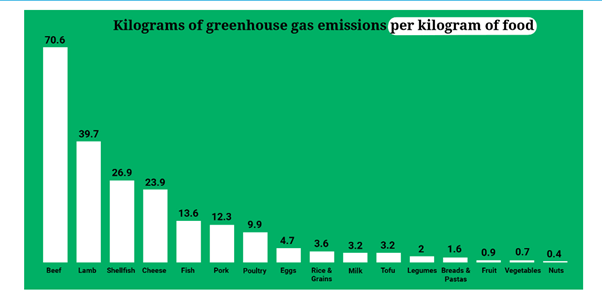
Beef has the highest negative impact on our environment since we emit over 70 kilograms of greenhouse gases just to produce 1 kilogram of beef. Lamb is the second most greenhouse gases intensive form of food as we emit roughly 40 kilograms of greenhouse gases just to produce 1 kilogram of lamb meat. On the contrary, fruits, vegetables and nuts produces the least greenhouse gases (GHGs) when it comes to per kilogram production of already mentioned types of food. Thus, we can also say that fruits, vegetables and nuts are the most eco-friendly form of food that is not only good for our health but is equally good for our environment as well. But there is also a solution for people who simply love consuming protein and this is what this short report is all about.
Solar foods is a Finnish foodtech and cleantech company that has developed a solution named “Solein” that is primarily 65 – 70% protein, 5 – 8% fat, 10 – 15% dietary fibres and 3 – 5% mineral nutrients. As per Solar foods, Solein is quite environment friendly when it comes to production and emits only 1% of the greenhouse gases when compared with the greenhouse gases emission of conventional meat. It is quite important to mention here that Solein does not require neither land nor fertilizer in the production phase. Thus, it is quite contrary to the way we normally produce food. In-fact, Solein is made out of air with the help of electricity. Solar food has been given food regulatory approval by Singapore Food Agency (SFA) that would allow the former to import solein in Singapore, manufacture it and to sell food products containing solein in Singapore. As per Solar food, the production of solein is quite similar to the way wine is produced today. However, the latter relies on sugar whereas, the former primarily uses a small amount of nutrients together with carbon dioxide gas, hydrogen gas and oxygen. During the production phase of solein, microbes are allowed to feast on nutrients, carbon dioxide, hydrogen and oxygen gases. Once this bioprocess is completed, solein is produced as an end result that can then be used with a wide variety of food including pasta, noodles, breads, snacks, beverages and even with ice cream. It is important to mention here that the production of solein does not rely neither on weather pattern nor on land availability. According to solar foods, solein can be produced in deserts and in space as well. The video given below is an intellectual property of solar foods and is shared here for awareness creation only.
Summing up all, our conscious choices that we make on daily basis have a very big impact on our physical health as well as the well-being and functioning of our planet. We can clearly see that eating a lot of beef, meat, sea food and cheese is neither good for us nor for the planet. These already spoken foods emits the most greenhouse gases during the production phase. On the contrary, breads, pastas, fruits, vegetables and nuts are good for us as these are easy to digest and thus keeps us away from obesity. Likewise, breads, pastas, fruits, vegetables and nuts produces the least greenhouse gases during production phase and are thus equally good for the environment as well. According to Mckinsey Global Institute, over 2 billion people are suffering from obesity and obesity itself causes a whooping 2 trillion dollar financial loss to global economy each year. Solein can prove to be a game changer when it comes to putting a dent in greenhouse gases emission curve from agriculture and food industry. Once given approval from concerned quarters within European Union, making Solein a part of our regular diet will be a better way of protein intake than consuming conventional meat. It will be good for our physical health and the ecological health of our planet. By doing so, we can certainly beat both climate change and obesity in on go.
© Copyright 2023 Ayoub Hameedi. All rights reserved.
Xshore
Ayoub Hameedi
When it comes to mitigating climate change, the best strategy is to sharply reduce greenhouse gases emission. There is a very strong connection between the former and latter. We all know that a stable climate we’ve been blessed with since last 10,000 years is a direct result of a very delicate balance of greenhouse gases in our atmosphere. Unfortunately, the biggest consequence of industrialization is that we have managed to disturb this delicate balance of naturally occurring greenhouse gases in our atmosphere. As a consequence, their concentration in our atmosphere is increasing with each passing year which is then driving an increase in global average temperature and causing a change in our previously stable climate. We need to put an end to our business-as-usual approach where we rely heavily on fossil fuels to foster our economic growth. As per the International Monetary Fund, the amount of subsidies given to fossil fuels by countries across the globe in 2020 was a staggering 5.9 trillion USD. The already spoken financial figure roughly represented 6.8 percent of global GDP in 2020. Unfortunately, the given subsidies are not going to either stop at or reverse from 6.8 percent of global GDP. In-fact, it is estimated that the given subsidies would exponentially grow to 7.4 percent of global GDP by 2025. It is again quite unfortunate to mention here that a lion’s share of fossil fuel subsidy roughly 42% offered in 2020 reflected an underpricing for local air pollution followed by an underpricing for global warming costs of roughly 29 percent. A graph given below reflects the same:
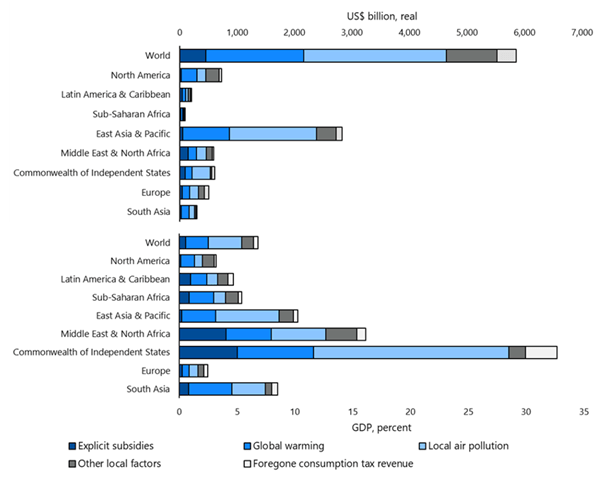
The graph given above is an intellectual property of IMF
Fortunately, there are actors that have the audacity to acknowledge greenhouse gases emission as a problem and are thus developing solutions that would help economies across the globe to sharply reduce their emissions. Xshore is a Swedish cleantech company that makes electric boats for personal usage. It is indeed taking a much needed step in the right direction to create a carbon neutral future for us all. Eelex 8000 is the first electric boat designed and developed by Xshore. It has a 170 KW electric motor and also includes a 126 KWh battery as well. It has a 24 inch touch screen display and can be fast charge in an hour. Since it is powered by electricity therefore it causes no greenhouse gas emissions when out in the sea or in a lake and is comparatively silent in operation when compared with conventional personal boats. Customers can order Eelex 8000 in 3 difference colours namely Sandy, Moss Green and Coffee. All of the Eelex 8000 comes in Sandy colour by default, however, customer can also replace Sandy with Moss Green and Coffee colours too. Replacing Sandy with Moss Green will cost 8,500 euros whereas, replacing sandy with coffee colour comes in with a price tag of 20,000 euros. An informative video regarding the features of Eelex 8000 is given below:
An important question that might arise in a reader’s mind is what would happen if I would run out of battery right in the middle of a lake or sea. Eelex 8000 has a special feature that allows the boat to enable power saving mode on its own as soon as the battery drops down to 10% of the remaining charge. When this happens, it means that you cannot drive boat more than 6 – 7 knots speed. It is this function that allows the boat to safely reach the shore and thus avoiding the probability of running completely out of battery in the middle of no-where. XShore1 is another electric boat from XShore which is quite similar to Eelex 8000 when it comes to performance. We can easily fast charge Xshore1 up to 80% battery in just 50 minutes. It has a cork deck and one can choose between two different models namely open and top versions. An excellent point about Xshore is that their boats are designed and manufactured in Sweden.
Summing up all, Xshore is taking the much needed steps in the right direction when it comes to bending the emissions curve from personal boats. This also gives us a hope when it comes to bending the emissions curve from shipping sector as well. As per the European Commission, greenhouse gases emission from shipping sector represented 2.9% of the cumulative anthropogenic greenhouse gases emission in 2018. There is a dire need for us to develop such a solution for container and cruise ships as well. It is important to point out here that we must achieve the goal of carbon neutrality by the mid of this century however, we should not limit ourselves to 2050. Rather, we should increase the pace of green transition so that we could limit temperature increase to 1.5 degrees, minimize the negative consequences of a changing climate and achieve carbon neutrality “before” 2050.
© Copyright 2023 Ayoub Hameedi. All rights reserved.
Too Good To Go
Ayoub Hameedi
Food is an integral part of our daily life. We cannot imagine a healthy life without having an adequate access to nutritious food on daily basis. However, food quite often serves as a dual edge sword. On one side, it sustains life however, on the other side, if it ends-up in a landfill as waste, its decomposition would release methane gas. It is important to point out here that methane gas is much more dangerous of a greenhouse gas than carbon dioxide when it comes to an increase in the global average temperature and a consequently changing climate. As per the United Nations, food loss and waste accounts for 7% of the global greenhouse gases emission. On top of this, it takes slightly less than one-third of the total agricultural land area to produce the amount of food that would neither make it to the shelves in grocery stores nor to the dinner tables in our homes. It’s not only just the greenhouse gases emission and the land required to produce that food, it also the amount of fossil fuel needed to drive the machines to harvest this food and to transport them to the grocery stores and then to our homes. Moreover, the amount of electricity needed for food storage and during different steps in food processing and packaging. Most importantly, the amount of water used to grow crops and fertilizers needed to improve yield and revenue for farmers. As per WWF, agriculture is the most water intensive sector and thus consumes the highest amount of water when compared with industrial and household usage. Food loss and waste occurs all the way from the agricultural plot due to inadequate harvesting technology and infrastructure down to grocery stores due to confusion over labels and in our homes as a result of bulk buying and an inadequate storage facility.
A Danish start-up “Too Good To Go” has taken an excellent initiative to bridge the gap between the grocery stores, hotels, restaurants, bakeries and consumers in order to sell surplus food at relatively inexpensive price that would otherwise go waste due to confusion over marking/labels in the franchises. Too Good To Go is now present and operating in 17 countries in Europe and North America. Sweden, Denmark, France, Germany, United States and Canada are few examples in this regard. As per Too Good To Go Sweden, all the good food should go in our stomachs and not to the waste bins. A lot of good food available at restaurants, coffee shops, hotels and grocery stores go waste each day just because it did not sell on time. With the help of Too Good to Go’s mobile app, customers can select and buy available food at one-third of a price and can thus enjoy quality food at an inexpensive price. You can either pay via Too Good To Go’s mobile app or at the chosen place as well. It is quite amazing to mention here that roughly 69 million users have subscribed to their mobile app and have altogether saved 183 million meals from trash bins and landfills. We all know that Christmas is one of the biggest food consuming holiday’s in Europe and North America. Thus in order to reduce food waste during this time, Too Good To Go has designed a campaign “Share, Freeze, Remix” where they encourage people to reduce food waste by sharing more and more food with other people, freezing leftover food for future and mixing them with other recipes to create something new. TIME Magazine has named Too Good To Go as amongst the 100 most influential companies of 2022. In my personal opinion, it is an excellent business idea to connect consumers with food chains, hotels, coffee shops and grocery stores via a mobile app. This not only bridges the gap between different stakeholders but also brings the cost down for consumers. Most importantly, it also facilitates the businesses in fighting food waste and bending an overall greenhouse gases emission curve through cutting down on wastage of resources.
The above video is an intellectual property of Too Good To Go
OneTrust is facilitating Too Good To Go in off-setting its carbon emissions. According to the OneTrust calculations, Too Good to Go emitted 2475t CO2 equivalent in 2020 and another 9612.59t CO2 equivalent in 2021. To off-set its carbon emissions, Too Good To Go has invested in a certified climate action project to protect Amazon rainforest in Peru. Likewise, it has invested in a solar pv project with an installed capacity of 400 MWs in India and has also invested in another windpower project with an installed capacity of 172 MWs in Turkey too. Lastly, Too Good To Go is supporting the use of efficient cooking stoves in Malawi. Altogether, these four certified climate action projects helped Too Good to Go in off-setting 14,157t CO2 equivalent. Thus neutralizing all of its emissions for 2020 and 2021.
Summing up all, Too Good To Go is playing an extremely important role when it comes to changing the business-as-usual approach. It is not only helping the consumers in enjoying quality food at an inexpensive price but also helping businesses in reducing the waste of their surplus food. It is an excellent case study when it comes to bending the emissions curve along with reducing the prices as well. It is absolutely possible that we can reduce emissions and prices together and can thus create a win-win situation for all, where everyone would emerge as a winner. Together, we can all make this beautiful planet an even more sustainable place to live in for us all and our coming generations. Much has been done in this regard, however, the fight against climate change is far from being over. Thus much more remains to be done as well to reduce greenhouse gases emission and to limit temperature increase to 1.5 degrees.
© Copyright 2022 Ayoub Hameedi. All rights reserved.
A biodegradable water bottle
Ayoub Hameedi
Water is the most important resource on our planet. It is the basic resource that allows life to sustain and flourish and in its absence, we cannot really imagine life like we do now. However, when it comes to the consumption of water much has changed during last 50 years due to the use of plastic water bottles. I personally believe that drinking water from a plastic bottle is not really good for the environment since plastic takes few hundred years to break down. In my opinion, drinking water once and then leaving waste for few hundred years is a very wrong idea. We can actually take immediate actions like reusing and recycling the water bottles however, many might not appreciate a change in their existing behavior patterns. As per the UN Environment Programme, we purchase around 1 million plastic water bottles each minute in countries across the globe. A lion’s share of these bottles ends-up in our ecosystem as waste.
Now imagine a solution where the water bottle would immediately starts to decompose once empty. By developing such solution, we can actually reduce the amount of plastic waste that ends up in our ecosystems and chock our water ways. Ari Jonsson, an Icelandic student has designed one such solution that holds its shape perfectly as long as it is filled with water. However, it starts to biodegrade the moment it gets empty. The solution is made of a natural material named agar and is primarily obtained from algae. When water is added to the powdered form of agar, the resulting mixture can be transformed in any desirable shape such as a water bottle. However, the water bottle will hold on to its shape as long as it is filled. The moment it gets empty, it would start to decompose immediately.
As per the United Nations Environment Programme, 9200 million tons of plastic was produced in world from 1950 up to 2017. Unfortunately, 7000 million tons of the produced plastic ended up as waste in our ecosystem. We can also say that more than two-third of the produced plastic became waste in our landfills and water bodies. If we would maintain the business-as-usual approach when it comes to global plastic production, we might produce a cumulative 34000 million tons of plastic by 2050. Unfortunately, more than two-third of which would again end up as waste in our ecosystems. We must change our course when it comes to plastic production and consumption. We must find sustainable solutions to tackle the environmental issue of plastic waste.
Summing up all, plastic waste is chocking up our ecosystem and causing havoc for other species that share this beautiful planet with us. One of the most common and ugliest example is when we see photographs of different marine species who are either entangled in plastic waste and are unable to get rid of it or they have actually died due to the ingestion of plastic waste. As discussed earlier, plastic might take few hundred years to break down once thrown out as waste. Unfortunately, even after breaking down it would still be a problem for us and other species in our ecosystem. Breaking down of plastic simply means that a large piece of plastic is now broken down into several smaller pieces and it would still exist as waste in our ecosystem whether we like it or not. The best option for us is to skip the use of plastic and to rely more on sustainable alternatives. A grocery bag made of either paper or cloth is an excellent example in this regard. We can consider it as a very small step but it would indeed be a much needed step in the right direction when it comes to reducing the consumption of plastic and the resulting waste it produce.
© Copyright 2022 Ayoub Hameedi. All rights reserved.
Velosophy cycles: A giant leap to sustainability, one bicycle at a time
Ayoub Hameedi
It is a well-known fact that climate change is the biggest socio-economic and environmental issue of this century. The most brilliant thing about this issue is that we have already developed solutions to reduce greenhouse gases emission and to fight climate change. The sector of transportation is one of the weakest link in the chain, when it comes to bending the emissions curve and fighting climate change. It is amongst the largest point source of greenhouse gases emission in the world. I personally believe that the choices we make in our daily life can create a serious dent in the emissions curve. As an individual, we can choose to leave the personal car parked in the garage and to commute via public transport. Another equally brilliant idea is to commute by bike, especially ones, made entirely of renewable/recycled materials. This short report is about one such initiative “Velosophy cycles” a green company based in Sweden that makes bicycle from recycled aluminum. Velosophy has also collaborated with Nespresso to introduce RE:CYCLE, a bike that is made completely from the recycled aluminum extracted from thrown away Nespresso capsules. The velosophy cycles are equivalent to traveling in a classical manner, as special attention is paid to both the design and choice of colors. A video representation of Velosophy (RE:CYCLE) is as follows:
(This video is an intellectual property of Nespresso)
When it comes to social responsibility, Velosophy cycles is executing one for one program where the company donates 1 bicycle to girls in developing countries for every bicycle they sell. It is important to mention here that having access to a bicycle increases the chance for girls to finish school and thus to enjoy an improved quality of life due to completed formal education.
Prioritizing bicycle is good for our health, our pocket and for the environment. On the contrary, traveling by personal car might seems to be luxurious but adds more to your expenses, ain’t very helping when it comes to losing calories and particularly damaging for the environment, if its inefficient. Choosing bicycle can help us save serious money. When it comes to health, taking bicycle is like hitting gym everyday even if, you do not want to. We can also avoid getting stuck in traffic jams particularly, if we live in a big city like New York, Mumbai or Karachi. Thus, going to work on bicycle can improve our health, save us time and money provided done over a sustained period of time.
Getting closer to the end, Velosophy is moving ahead in the right direction when it comes to the implemention of sustainability in the sector of transport. The company primarily uses recycled aluminum in its products and donates a bicycle to girls in developing countries for every bike they sell in their financial year. This initiative gives a perfect feeling to the users of Velosophy that they are a part of something bigger, something that is an excellent tool in fighting poverty and reducing gender gap in developing countries. Moreover, the product that they are commuting on is climate positive in its functioning and development. Velosophy is indeed a fine example of making your customers feel special and uplifting their spirits daily to make this world an even better place to live in for everyone.
© Copyright 2020 Ayoub Hameedi. All rights reserved.
Fridheimar: An excellent case study for food production in greenhouses
Ayoub Hameedi
It is possible for developed countries especially the ones in the North to reduce their food related GHGs emission through the local production of food in greenhouses. The sector of agriculture is one of the largest source of greenhouse gases emission in the world. In order to mitigate climate change, it is especially important for Nordic countries to reduce their greenhouse gases emission from agriculture sector. An excellent way to accomplish reduction is to produce food in greenhouses with no negative impact on environment. Iceland has practically created an example for the rest of the Nordic region as to how food can be produced locally in greenhouses with the available natural resources. Fridheimar is an Icelandic example of how food can be grown locally in the harshest of the environments through available natural resources. In my personal opinion, it would be an excellent idea for Swedish government to make greenhouses an integral part of Swedish school system, so that children would know how to grow food in a sustainable manner with either least or no impact on environment. It would also be a good opportunity to expedite the implementation of sustainability in food production sector in Sweden. According to a 2018 report from Swedish Environment Protection Agency, agriculture was responsible for 13% of the total greenhouse gases emission from Sweden in year 2016.
The Story of Fridheimar starts when an Icelandic couple Knútur & Helena purchased Fridheimar in 1995. The place was already in use for horticulture. The couple starts renovating the Fridheimar and constructing a greenhouse on an area of 1174 square meters. During 2002 – 2006, the couple added another greenhouse spanning over an area of 1,000 square meters with artificial lighting systems. Few years later in 2011, the overall area of greenhouse/food production was again increased to another 60%. As a result of continuous improvements and expansion of greenhouse, Fridheimar now produces a tonne of food a day and roughly a cumulative 370 tonnes of food on annual basis. There is dire need that such a sustainable food production model should be replicated on either large or small scale in all across Sweden. A good point to begin with is to make it compulsory for municipal schools to develop greenhouses, where kids would be given the much needed knowledge on how to grow organic food with available resources at local level. National government can provide electricity to the proposed greenhouses with the help of solar panels and vertical axis wind turbines (VAWTs). This would create a deep understanding among children on the importance of food, resources required to produce food locally and why we need to reduce food waste in our daily lives even further. Most importantly, provision of organic food in Swedish Schools would be a giant leap towards promoting good health & well being and improving the quality of given education even further. A practical example of VAWT equipped with solar pv for the sake of power generation is as follows:
(Copyright: Sycamore Energy Inc)
All in all, making greenhouses a compulsory part of Swedish Schools would be giant leap towards the implementation of Sustainable Development Goals in the length and breadth of Sweden. These greenhouses would act as an engine of awareness creation among our young ones on the issue of organic food, reducing food wastage and the production of clean electricity. Finally, municipal administrations would be able to increase the share of organic food served to children in schools all across the Sweden.
© Copyright 2020 Ayoub Hameedi. All rights reserved.
Empowering Young ones (age 16) with the right to vote is a must for Sundbyberg
Ayoub Hameedi
The Sundbyberg chapter of Swedish Green Party has come up with the proposal that all of the young ones (age 16) must have right to vote in the forth-coming elections in year 2022. In my personal opinion, it is an excellent proposal that would prove to be a much needed step in the right direction. Young ones are the architects of our future and its about time that we would empower them with the authority and confidence to elect representatives at the national and local level. Here are the 5 most important reasons why the young ones in Sundbyberg municipality should have the right to vote in 2022:
- In original spirit, a parliamentary proposal was introduced by Jabar Amin (MP) in the Swedish Parliament, where Jabar focused on the fact that the voting right must be reduced to 16 years from the current 18 years limit. To support his proposal, Jabar Amin provided the fact that Argentina, Brazil, Ecuador, Cuba, Nicaragua, Austria, Bosnia & Herzegovina and Jordan had already allowed 16 years to vote at the national level. Furthermore, Germany and Norway have allowed all of the 16 years old to vote at the local level. Lastly, the European Council in 2011 accepted a resolution that all of the 16 years in European Union (EU) can vote in the European Parliament elections. It is a high time for Sundbyberg too, to reduce the voting age from 18 to 16 in the forth-coming elections in 2022.
- Our children are our future. Therefore, they must have the power and authority to vote for whomever they think appropriate. Children (age 16) must not wait till age 18 to use their basic human right.
- Green Party in Canada is of the view that if 16 years old can work and pay tax, they can also vote and choose their own political representatives too. It should be the same in Sweden too. If 16 years old can work and pay tax in Sweden, they should also be given the right to choose their own political representative too.
- It is equally important to ensure that all of the young ones age 15 – 16 must be empowered with the knowledge as to why it is necessary for us to cast vote. Sitting in home on the election day or during the vote casting period is not an option. It is important for each and everyone of us to go out and use our civil right to elect politicians that would best safeguard future for us and our coming generations.
- Young people across the globe are demanding politicians to take quick actions to reduce greenhouse gases emission and to mitigate climate change. Swedish Climate Activist Greta Thunberg and millions of kids and elders from every walk of life are a part of global climate strike with the key aim to encourage politicians and governments to take concrete actions to fight climate change. Young ones are at the forefront of the awareness creation campaign in the most crucial fight against climate change. Now, is the right time for Sundbyberg too, to take the much needed step in the right direction by empowering the young ones age 16 with the right to cast vote in 2022. The right time to implement this initiative is Now as our young ones are confident and are capable to make their own choice to create a sustainable future for everyone.
© Copyright 2019 Ayoub Hameedi. All rights reserved.
Rens: Sneakers that are made of nothing but coffee ground and plastic waste
Ayoub Hameedi
Plastic and coffee ground waste are two major environmental issues of our modern day life. According to UN Environment, each minute we buy 1 million plastic water bottles that collectively then leads to the purchase of 1,440 million plastic drinking water bottles in a single day. Another way to convey the same thing is that we purchase 525,600 million plastic drinking water bottles in a single year. Similarly, we consume more than 2 billion cups of coffee in a day across the globe. This produce a lot of coffee ground waste, majority of which (around 6 million tonnes) ends-up in landfills. Coffee ground in landfills produce methane gas that is way more dangerous than carbon dioxide gas when it comes to negative impact on environment. This represent a dire need that concrete actions must be taken across the globe to reduce coffee ground and plastic waste. One such action has been taken by a Finnish start-up company Rens that has utilized plastic and coffee ground waste as key resources to make sneakers from.
In my personal opinion, it is indeed a fantastic idea to utilize waste that we produce in a very large amount on daily basis and to turn it into a commodity that everyone of us needs. The given idea is a much needed step in the right direction. A question to ask would be what is the actual composition of a pair of sneakers?. How much of a Rens produced sneaker is coffee ground waste and how much of it is plastic. Each pair of sneakers contains around 300 grams of coffee ground waste and approximately 6 plastic bottles. A video reflecting the visual composition of Rens produced sneakers is follows:
(This video is an intellectual property of Rens)
There is a dire need that other shoe manufacturing companies across the globe would follow the same path. In the beginning, it would be excellent that shoe making companies will use coffee ground and plastic bottle waste to form a certain percentage of their products. The companies across the globe can then eventually increase the percentage to half and to a point, where all of the shoes across the globe would simply be manufactured from coffee ground and plastic bottles. It is equally important that the manufactured shoes could be recycled once a pair would complete its life span. Likewise, it is pertinent to invest financial resources on research & development to find materials other than coffee ground and plastic bottles to manufacture shoes. By doing so, we would turn our waste into resource to form a commodity that is one of the biggest necessity of our daily life. In nature, there is no concept of waste. We also need to adopt the same philosophy in our business-as-usual approach and in our daily lives. It is only then we would be able to create a world that would be sustainable to live in for each and everyone of us.
© Copyright 2019 Ayoub Hameedi. All rights reserved.
An export of waste-to-energy technology can help Sweden to earn revenue in Billions (USD) on annual basis
Ayoub Hameedi
Waste is a resource that can either be considered as a useless thing that ends-up in landfills or it can be considered as an effective source of power production. Countries with fostering circular economies extract energy in the form of heat and electricity from waste. Sweden is certainly the best when it comes to extracting heat and electricity from waste. Sweden extracts 3 MWs of energy from each ton of waste and thus out-compete every other country in Europe in this field. The export of waste-to-energy technology to countries in need within Europe and rest of world can help Sweden maximize its revenue in billions (USD) on annual basis.
In my personal opinion, countries in Southern and Eastern Europe are the ones most in need of this innovative solution. According to European Parliament, Malta, Greece, Cyprus and Romania sends almost 80% of their municipal waste to landfills. Likewise, Croatia, Latvia, Slovakia and Bulgaria sends more than 60% of their municipal waste to landfills. Spain, Hungary, the Czech Republic and Portugal lands half of their municipal waste to landfills. This represents a golden opportunity for Sweden to expand business collaboration, earn revenue and to increase the share of clean sources of power production through the export of WTE technology. It will also further improve Sweden’s standing as the best country, when it comes to mitigating climate change.
According to World Bank, Russia produced around 48 million metric tons of municipal solid waste in 2010. If the current practices would be maintained, the produced municipal solid waste would exponentially grow to 60 million metric tons by 2025. Unfortunately, Russia sends 95% of its total municipal solid waste to landfills. A reserve estimate shows that the landfill sites in Russia contains over 32 billion metric tonnes of municipal solid waste. From Sweden’s perspective, this means over 96 billion MWhs of energy that could be harvested sustainably to reduce Russia’s reliance on fossil fuel’s. According to U.S. Energy Information Administration, Russia generates around 87% of its total energy from coal, oil and natural gas. It is a naked fact that climate change is an end result of our unsustainable reliance of fossil fuels. Thus, if Sweden would help Russia in extracting energy from its waste, it would certainly help the latter in reducing its reliance on fossil fuels. The story of waste is quite the same for India too. According to Planning Commission (India), 62 million tonnes of municipal solid waste is dumped in landfills in India on yearly basis. Likewise, South Africa sends an estimated 90% of its generated waste to landfills. The reality of numerous other countries across the globe would not be quite different.
All in all, Sweden is certainly the best in Europe when it comes to extracting energy from waste. The export of WTE technology to countries in Eastern & Southern Europe, Russia, South Africa and India will help these countries to make landfills, a strategy of the past. It will of-course help all of the aforementioned countries to increase the share of clean sources of power production in their overall energy mix too. As already discussed, the export will further increase the business collaboration between Sweden and all of the already spoken countries. It will also help Sweden to earn revenue in billions (USD) on annual basis and to promote the concept of circular economy too. The oil crisis of 1973 forced Denmark to explore clean sources of power production. As a result, Denmark installed its first wind turbine in 1979. Today, Denmark earns over DKK 83 billion from the export of clean and other energy technologies. Waste-to-energy technology is already mature in Sweden and exporting this technology to countries in need across the globe will breed the same results for Sweden too.
© Copyright 2019 Ayoub Hameedi. All rights reserved.
Increasing carbon tax to two-fold in Sweden would be a much needed step in the right direction
Ayoub Hameedi
Climate change is no doubt the biggest environmental issue of our time. It is causing a financial loss of USD 1.2 trillion to economies across the globe. An increase in the concentration of carbon dioxide gas into the atmosphere is the primary reason for climate change to occur across the globe. There are several strategies to mitigate climate change. The most inexpensive among all is the re-plantation and restoration of forests in countries across the globe. Trees have the natural ability to remove carbon dioxide from the atmosphere. Trees combine the absorbed carbon dioxide with water and turn the mixture into wood. During the aforementioned process, the oxygen is released into the atmosphere. Thus plantation and restoration of degraded land helps us in reducing the concentration of CO2 in our atmosphere. Another equally efficient method is to increase the installed renewable power generation ability so that our reliance on fossil fuels would be reduced. It is quite impressive to mention here that in 2016 China, USA, Germany, Japan, India and Italy had a collective installed wind, solar, bio-power, Ocean, CSP & geothermal power capacity of 631 GWs. China had a lion’s share of 258 GWs of installed renewable energy capacity, followed by USA (145 GWs), Germany (98 GWs), Japan (51 GWs), India (46 GWs) and Italy (33 GWs).
Another equally efficient way is to put a price on the emission of carbon dioxide gas into the atmosphere. By doing so, the government makes the polluter pay for the price and simultaneously makes clean energy sector as price efficient and competitive to the conventional sources of power production. Sweden has the best climate change mitigation plan in place. Germanwatch has categorized Sweden as the best country on its list of Climate Change Performance Indicator for year 2019. Sweden has an ambitious tax on the emission of carbon dioxide gas however, in my personal opinion, it needs to be raised at-least two-fold. It is important to mention here that masses in Sweden pays 1180 SEK to emit 1000 kilograms of carbon dioxide gas in atmosphere. Another way to analyze the given fact is that masses pay SEK 1.18 to emit a kilogram of carbon dioxide gas into atmosphere. Now, in my personal opinion this needs to be raised at least 2x, so that masses would pay SEK 2.36 per kilogram of CO2 emission in atmosphere. This would raise the cumulative price tag to SEK 2360 to emit 1,000 kilograms of CO2 gas in atmosphere. Now, this move might not be perceived as a much appreciated step however, it would be a much needed step in the right direction to enable a green transition in private transport sector in Sweden. From a policy perspective, an equally important step for Swedish government is to increase the pace of installation of solar pv and windpower, so that there would be no gap in the demand and supply once the transition would begin. It is important to note here that once reached a particular level, the transition to electric vehicles in Sweden would be exponential.
All in all, raising the current CO2 emission tax to 2x would be a much needed step in the right direction. It would enable a green transition in the private vehicle sector plus it would provide government with additional revenue that could then be utilized to increase the installed renewable power generation capacity in Sweden. Implementing CO2 emission tax was the most difficult step however, raising the current CO2 tax ratio to 2x would not be that difficult. We in Sweden consume resources equivalent to 4 worlds in a single year. We have a big ethical and moral responsibility. After all, we only have one planet, a place we all call our home.
©Copyright 2019 Ayoub Hameedi. All rights reserved.
Max Burgers AB – Replacement of plastic made knife and fork with wood based cutlery
Ayoub Hameedi
Max Burgers AB is one of the most famous fast food options in Sweden. In 2019, Max decided to put a full stop to the use of plastic in its operations and to replace products made of plastic with more of a natural alternative with less or no impact on the environment. To implement the planned strategy, Max replaced plastic based knife and fork with ones made from wood. Two years earlier (in 2017), Max Burgers AB roughly produced 135,000 tonnes of carbon dioxide out of which it neutralized 105,000 tonnes of CO2 emission through carbon credits. All of the investment for carbon credits was commenced in Trees for global benefits in Uganda and carbon credits were purchased from Zero Mission. It can be considered as a case study of how companies with large carbon footprints can take positive steps in the right direction that would help them in minimizing or completely off-setting emissions on annual basis. I will write a separate report on carbon off-setting plan of Max Burgers AB during the coming two weeks.
This report particularly focuses on Max Brugers AB’s initiative to replace the plastic knife and fork in its restaurants operations with more sustainably produced wood based knife and fork. A question that might arise in a readers mind is what big of a difference would it make, if we would replace plastic based knife and fork with wood based cutlery. The answer for my readers is that it would make one big of a difference. It is a commonly known fact that disposable plastic is one of the biggest environmental issues of our time. Today, we have around 6.3 billion tones of plastic waste that has never been recycled. It means it would make its way to oceans and seas, where it would create problems for marine life and destroy the habitats too. This clearly represents what sort of a destructive impact plastic produces on us and on our surrounding environment.
Max Burgers AB has 125 restaurants in 6 countries across the globe and serves around 40 million guests on annual basis. Now, if half of the total guests would choose wood based knife and fork, it would help Max Burgers AB to reduce plastic waste by 20 million sets on annual basis. It is excellent if Max Burgers AB have introduced wood based cutlery in all of its 125 restaurants. If not, it can consider this bold step to increase the implementation of sustainability in its business operations. It is important to mention here that the idea of a sustainable world is incomplete as long as we have plastic waste to deal with. Max Burgers AB have set an excellent example as how a business organization with large number of guests and environmental impact takes a positive measure to protect environment.
© Copyright 2019 Ayoub Hameedi. All rights reserved.
Better Shelter – A quick housing solution for those in need
Ayoub Hameedi
A decent quality of life is based on 5 key components (i) housing & a strong public transport system (ii) meaningful means to earn financial resource (iii) financial services and security (iv) continuous education (v) clean sources of power production. Housing as a facility ensures access to a decent place to live, meaningful means provide you financial resources & job satisfaction and banks then helps you to safely and securely manage your money. Education helps in improving circumstances and finally clean sources of power production and a strong public transport system ensures a sustainable future for everyone. It is quite unfortunate to mention here that 68.5 million people are forced to leave their homes due to terrorism, poor governance, corruption and climate induced natural disasters. The masses leaving their homes lack access to all of the already spoken components of a decent quality of life and normally seeks security in another country. Thus, they are in need of an immediate solution in the form of a place to live in. One such solution has been developed by Better Shelter, that is a social enterprise based in Sweden and provide housing solution to those who have left everything to seek life security in another place. Better Shelter provides post-emergency housing solution in collaboration with UNHCR and IKEA Foundation.
The offered solution covers a total space of 17.5 square meters and a single unit can provide post-emergency assistance to around 5 people. The entire structure has a length of 5.68m, width of 3.32m and height of 2.83 m. Its walls and roof panels are made of semi-hard and opaque plastic panels. It can last up to 3 years in a clean, dry and ventilated environment and can sustain temperature between 5 – 40 degree Celsius. The housing solution is powered by solar powered LED lamp that can provide light for six hours. It also contain multiple charging plugs to charge gadgets. The structure in consideration can sustain wind up to 28 meters per second and provide an evacuation time of 2 minutes in case of an emergency. The whole unit costs around €1150 and can easily be installed by a team of four people in around 6 hours. The structure requires no additional tools, machines and technical experts that means it can easily be installed in remote areas without further assistance. The indoor height of the structure varies from a minimum of 1.8 meters to a maximum of 2.7 meters. A completely assembled unit is as follows:
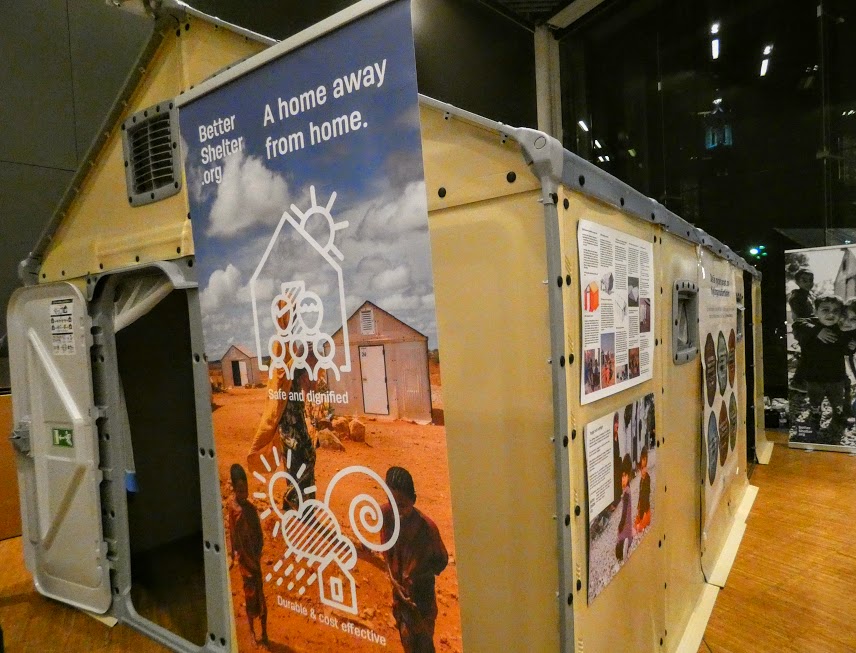
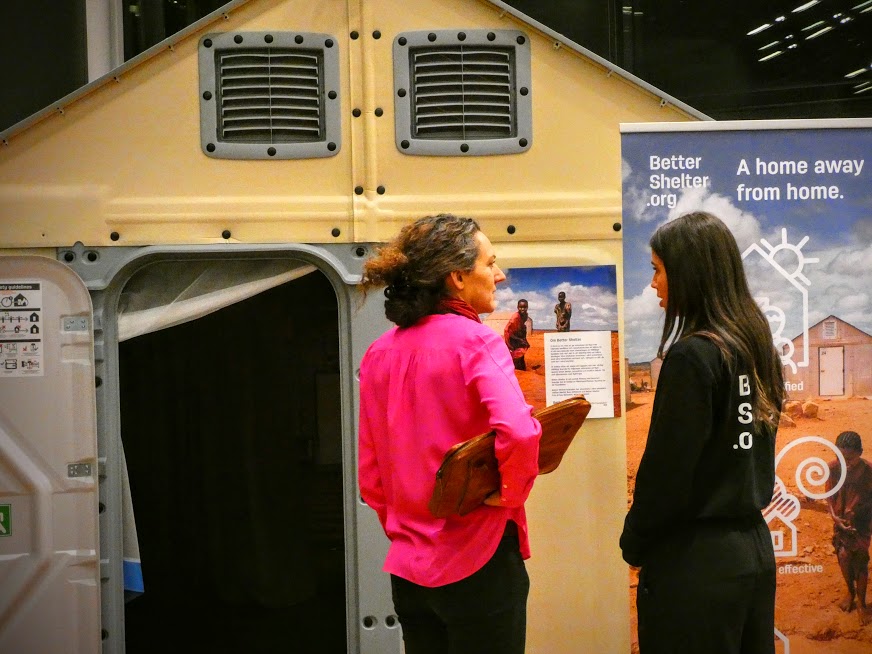
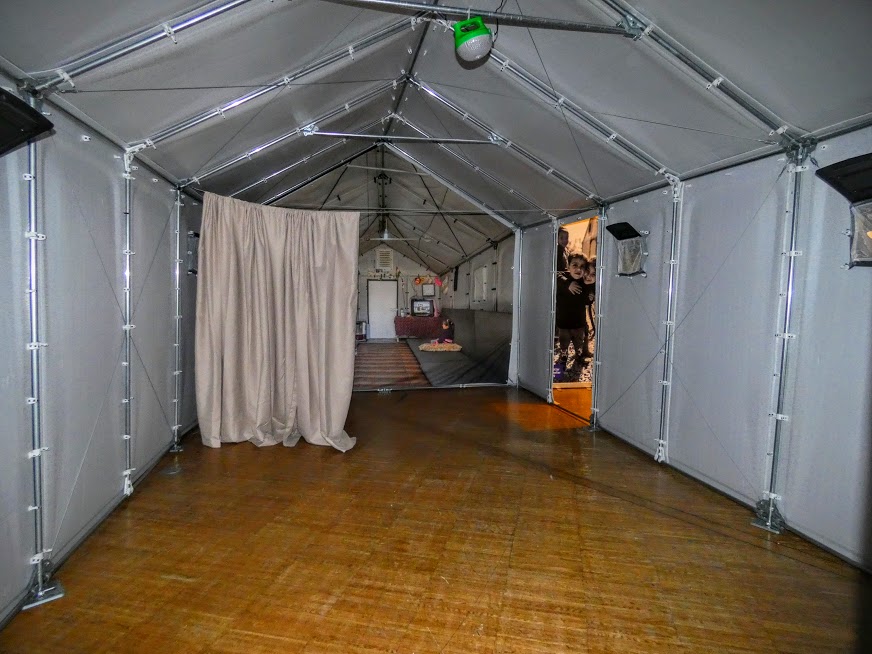
Photographer: Ayoub Hameedi (www.projecthuner.com)
Better Shelter organization is already providing assistance to those in need in Algeria, Bangladesh, Botswana, Brazil, Burundi, Ethiopia, Greece, Iraq, Nepal, Montenegro and in numerous other countries across the globe. The quick housing solution is easy to assemble, financially inexpensive and provide a decent accommodation to a family in need of assistance. The offered solution is capable to release an immediate pressure from the hosting countries and numerous organizations working to ensure a decent quality of life for everyone. It also helps in implementing sustainable development goals as an immediate housing solution prevents families from sinking deeper into poverty. All in all, better shelter is a solution that offers a decent living place to families suffering from a natural disaster or a man-made one. It is indeed a right step in the right direction to create a world that would have an ability to provide decent accommodation on immediate basis to those in need.
© Copyright 2018 Ayoub Hameedi. All rights reserved.
Gram – An innovative solution to eliminate packaging and plastic waste from your grocery shopping list
Ayoub Hameedi
Grocery shopping is a must for every household regardless of its financial condition or geographical location. It is also a source of waste in the form of carton based packaging and shopping bags made of plastics. But what if households were given the option to do grocery shopping without producing plastic and packaging waste. It would be a win-win situation for customers as their waste would be reduced and for grocery stores as they have to invest less human effort and time to remove carton packaging. It is equally good for suppliers too. Thus, the collective negative impact of customers, grocery stores and suppliers on environment would be reduced. Apart from customers, stores and suppliers, it will also save money to municipal governing bodies who otherwise have to spend finances to recycle packaging materials and plastic. One such solution has been provided by Gram that is a zero waste grocery store and provides complete freedom to its customers to purchase grocery products with creating any packaging or plastic waste.
Gram has completely eliminated the use of plastics and packaging from its supply-chain but then a question to ask would be how does this whole system work?. The Gram store only buy products from local producers and allow the customers to bring in their own jars to fill things in. An important point to remember is that the jars must be cleaned properly. The Gram store also sells glass jars, bottles, clothing and paper bags to its customers so that they can carry purchased products in a convenient manner to their homes. When a customer brings in a clean glass jar to Gram, he or she is required to measure the weight with the lid intact. The customer would then receive a sticker reflecting the weight that he or she would paste on the jar. The customer would then store whatever product he or she needs in the jar and is all good to visit the cash counter for the payment.
A competitive advantage that Gram enjoys over the conventional stores is that it has completely eliminated the need of carton based packaging and plastic bags from its supply chain. The taken step is a giant leap in the right direction when it comes to the implementation of sustainability. The idea of Gram might be unconventional in nature but gradually the customers will get familiar with the concept. Most importantly, the grocery shopping in Gram store gives a relief to the customers, that they are doing something good for the environment. Indeed, Gram is a unique idea however, still there are few improvements that it can make to upscale the implementation of sustainability even further. If have not already, it can choose to power the store with clean electricity and can also install solar panels and vertical axis wind turbines on roof-top. It can also use electric vehicles powered by clean electricity to transport food products from the suppliers to store in coming 3 – 5 years. The initiative of packaging free grocery shopping should be appreciated and must be seen in a larger context. A city is basically a network of showrooms, boutiques and other types of stores that gives life to socio-economic activities, generate employment and revenue. Thus, if all of the showrooms, boutiques and other stores would either completely eliminate the use of plastic and cartons from their supply chain or reduce their use by 50%, satisfy their electricity demand through clean sources, it would be a very important step in the right direction to create sustainable cities for everyone.
Unfortunately, Earth Overshoot Day for Sweden was on 4 April 2018 that means we have consumed whole year‘s resources in just 3 months and 4 days. Keeping up with the same routine means that we would need approximately 4 world‘s to satisfy our demands for a year in Sweden. Gram has initiated an example of how we can eliminate carton and plastic waste from our shopping list and simultaneously save finances that could then be invested on creating a sustainable future for everyone.
© Copyright 2018 Ayoub Hameedi. All rights reserved.
Rescued Fruits AB – A company with an aim to reduce fruit waste
Ayoub Hameedi
Fruits are an important part of our diet. They are a source of joy and supply us with vitamins, minerals and fibre too. However, fruits as any other type of food should not end-up in trash. Wastage is a sign of lack of compassion to humanity and reflects that we do not respect nature enough to take care of the products and services, it provides us free of cost. It is quite unfortunate to mention here that around 815 million people suffered from hunger in year 2016. There is no shortage of food in the world, in-fact, we waste around 1.3 billion tonnes of food on annual basis. In fiscal terms, the already spoken waste comes with a price tag of US 990 billion where the developed countries wastes around USD 680 billion, while the rest comes from the developing world. This amount is sufficient enough to practically eradicate extreme poverty from almost every country in the world. Besides financial resources, the amount of land that was used to produce the food could have been used for more appropriate of a purpose, instead of just producing food and letting it all go waste. Likewise, usage of fertilizers and water to grow food and fossil fuels to transport it from farms to grocery stores and then to our dinning tables all ends-up in vein too. In-fact, greenhouse gases emission due to the use of fossil fuels in transport sector accelerates climate change, an environmental issue that causes a financial loss of USD 1.2 trillion to global economy on annual basis. Similarly, we can understand the importance of water from this basic fact, that the women in Sub-Saharan Africa spend 40 billion hours on annual basis to fetch water and wood to satisfy their basic needs.
In my opinion, there are two ways to deal with the issue of food waste. First and foremost is to purchase and consume only what is needed. By doing so, we can fight shop and throw away culture in a sustainable manner. Another way is to come-up with innovative ideas to reuse the food in interesting ways to minimize the waste. An excellent example has been created by a Swedish company Rescued Fruits AB that obtains fruits from wholesalers, grocery stores and farmers and turn them into 8 different flavors of juices for their customers. The idea is financially feasible and socially equitable as it creates employment and generates tax as revenue for government. It is equally sustainable with reference to environment as it uses fruits in a more productive way rather than simply letting them go waste. The need of hour for Rescued Fruits AB is to expand the scope of their market, first, aiming at whole of the Europe and then to the other parts of the world. It will not only ensure a sustainable source of revenue for Rescued Fruits AB but will also increase its positive impact on environment too. The business idea of Rescued Fruits AB also facilitates wholesalers, grocery stores and farmers to reduce their negative impact on environment too. However, a key challenge for Rescued Fruits AB might be to neutralize its impact on environment when it comes to transportation of juices to suppliers. It might be difficult now, but striving for a fleet of ev’s powered by clean sources in the coming 5 – 10 years can prove to be an effective tool to upscale sustainability in the operations of Rescued Fruits AB.
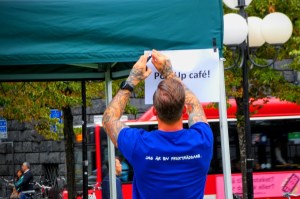
(Christoffer representing Rescued Fruits AB at Sustainability Day 2018 in Kungstradgarden, Stockholm. Source: http://www.ProjectHuner.com)
Rescued Fruits AB can also organize events where general public would have the opportunity to collect and separate fruits and then to process them into juices. This will enhance the customer’s confidence and it might also allow them to make choices with a positive impact on environment too. All in all, Rescued Fruits AB is an impressive initiative to reduce wastage of food. There is a dire need that young guns across the globe would come-up with similar ideas to mitigate food wastage to achieve the goal of zero hunger. It is only then, we would create a sustainable future free from the plagues of poverty and hunger for everyone.
© Copyright 2018 Ayoub Hameedi. All rights reserved.
How Oslo is promoting energy efficiency through E-street project
Ayoub Hameedi
The city of Oslo is aiming to achieve energy efficiency in its street lighting system. It has implemented a project through Intelligent Road and Street Lightning in Europe (E-street) on E18 that connects Oslo to Asker. As a positive outcome, all of the previous generation mercury lamps were replaced with high-pressure sodium ones. The new lamps are also connected to an electronic dimming gear and has power line communication feature too that enables the lamps to dim or bright according to the needs to the surrounding environment. Hafslund ASA, the company responsible for street lights in Oslo says that a swift transition from traditional mercury lamps to high pressure sodium ones can reduce energy consumption by 70%.
In my opinion, reducing energy consumption up to 70% in the operations of street lights is pretty impressive however, there is a dire need to expand the project to the whole of Oslo city and rest of the Norway. It can reap big rewards for the Oslo city administration and the national government, when it comes to promoting energy efficiency in Norway. It is important to mention here that the city of Oslo has around 55,000 street lights in operation. Thus, if each streetlight is upgraded to sodium lamps with electronic dimming gear and power line communication features and the resulting improvement would help administration to save USD 1 per street light a day, it means a financial saving of USD 55,000 on daily basis. Keeping the figure as constant, it means a financial saving of USD 1.65 million a month and an annual saving of USD 20 million for Oslo city. The collective figure for the whole of Norway would of-course be quite large. The national government can then use the saved finances to develop carbon capture and storage technology to fight climate change. The proposed recommendation is economically viable as it saves money, environmentally sustainable as it promotes energy efficiency and socially equitable as it can help other countries in reducing their energy consumption too. A sustainable transition to high pressure sodium lamps in Oslo city will certainly act as a case-study for rest of the Norway too.
Again, in my personal opinion, the expansion of energy efficient street lighting system can help Norway to earn revenue as well. Imagine a case, where Norway is helping India, China, Brazil, USA, South Africa and Pakistan to make a sustainable transition to energy efficient street lighting system. An offshore installation of wind turbines for the sake of power generation was once a dream for Denmark, now it earns a revenue of USD 8 billion on annual basis through the export of wind energy technology. So can be the case for Norway where few years from now, it can become the mecca of energy efficiency when it comes to installing efficient street lighting system. It will also be an excellent opportunity to diversify the Norwegian economy with the help of clean energy technologies. It is important to see street lighting system as an effective tool to promote sustainability. It is a necessity for every country regardless of geographical location or financial status and if it is transformed into an eco-friendly solution, it can prove to be a much needed step in the right direction.
All in all, promoting energy efficiency through the use of smart street lighting system is an effective way to increase the implementation of sustainability in any country regardless of its location and development status. It can prove to be an excellent sector where if proper resources in terms of finances, research and technical expertise are invested, it can help countries across the globe to achieve sustainable development goals particularly 11, 12 and 13. The financial savings through energy efficiency can prove to an effective catalyst in fighting poverty through job creation in countries across the globe.
© Copyright 2018 Ayoub Hameedi. All rights reserved.
8 House : A housing project in Copenhagen with an ability to mitigate urban heat island effect
Ayoub Hameedi
The start of 21st century has certainly highlighted the fact that we need to take massive actions to mitigate climate change, if we want to ensure a sustainable world with healthy ecosystem products and services for everyone. Climate change is a fact that we cannot choose to ignore. National Aeronautics and Space Administration (NASA) says that we have increased the concentration of carbon dioxide in our atmosphere from 320 parts-per-million in 1950 to 400 parts-per-million, more recently. As a result of this increase, the global average temperature has started to increase and the climate across the planet has started to change from its approximately 7,000 years of stabilized form. The atmosphere of Mars is completely made of carbon dioxide gas but in a very thin proportion. As a consequence, Mars is nothing but a planet where large geographical areas are completely frozen. On the contrary, the atmosphere of planet Venus has 154,000 times more carbon dioxide than planet Earth therefore, the surface of Venus is hot enough to melt lead. The examples of Mars and Venus helps us to understand that the concentration of carbon dioxide gas in atmosphere certainly affects the atmospheric condition of planets.
It is important to mention here that earth in its history has also experienced climate change on a mega-scale, for example, Quebec and Chicago were once completely covered with ice but with warming period gently making its place, the aforementioned areas became inhabitable. However, the already spoken changes took place over the span of hundreds or thousands of years. Thus species got enough time to adapt to the changing climate. On the contrary, the changes in climate that we are experiencing today are happening in a matter of decades. This quick change in climate leaves less or no room for species to adapt. All of the already spoken facts highlight the dire need to take every possible measure that would reduce the emission of greenhouse gases in our atmosphere. One such plan has been designed and implemented by Bjarke Ingels Group (BIG) and is located in the area of orestad in Copenhagen city.
The implemented project is known as 8 House or 8Tallet and its basic aim is to promote green roofs in the capital city of Denmark. 8 House has an impressive green roof with a total area of 1700 square meters in the form of two slopes that makes it different from rest of the constructed infrastructure in Copenhagen. It is a known fact that the presence of a thick green roof reduces the air-conditioning demand up to 75 percent during summer time. It is the largest housing project from private sector in Denmark and due to its unique features, 8 House received Scandinavian Green Roof award and Worlds best residential building award in 2011. The project is mostly comprised of large glass windows to optimize the use of day light and to reduce the consumption of electricity for this purpose. Simultaneously, the presence of green roof will certainly help biodiversity to flourish and will lower the urban heat island effect in 8 house. The project certainly highlights the fact that with the use of architectural expertise and innovative design, we can turn buildings into ecosystems to promote biodiversity and to reduce greenhouse gases emission.
Summing up all, 8 House is a ray of hope to optimizes the use of day light, decrease electricity related greenhouse gases emission, reduce urban heat island effect and to promote biodiversity in cities across the globe . In my personal opinion, an installation of vertical axis wind turbines that are smaller and more efficient than horizontal axis wind turbines would further increase the efficiency of 8 House. Finally, the project has white color that has the natural ability to reflect sunlight however, again, parts of it can easily be used to install solar panels along the vertical axis of 8 house. An installation of equipment to generate clean power will certainly improve the implementation of sustainability through the existing infrastructure.
© Copyright 2018 Ayoub Hameedi. All rights reserved.
Liquid Nano Clay: An Innovative Solution to mitigate desertification
Ayoub Hameedi
Desertification is certainly an important environmental issue of the present era. It leaves an area in a state that can neither be used for living nor for food production. The environmental issue itself causes a financial loss of USD 490 billion and negatively affects area three times to the size of Switzerland on yearly basis. On global level around 168 countries are affected by the negative impacts of desertification. The problem of desertification is a complex issue, however there exits a solution that might turn things for good in the right direction. The solution is known as liquid nano clay and it has been developed by a Norwegian company Desert Control. Liquid nano clay is a mixture of clay and water which is applied on land to increase its ability to retain water and thus could be used for reforestation or food production. The applied solution gradually sink into the soil and enables it to absorb and holds water. World Wide Fund for Nature (WWF) has recognized the liquid nano clay as a solution that if applied on a large scale for reforestation might help in mitigating climate change through the removal of carbon dioxide gas from our atmosphere.
The discussed solution is particularly useful for Bangladesh as it is suffering heavily due to climate change. It is quite unfortunate to mention here that over 6 million hectares of land in Bangladesh is degraded. Unfortunately, Bangladesh is also experiencing a rapid growth in its population that means more land is required to produce food. The liquid nano clay serves as a much required solution for Bangladesh to gradually restore its degraded land and open window of opportunities for its growing population. To kick start the restoration of degraded land, a pilot project can be initiated where a community would be selected for the application of liquid nano clay. In order to increase the public acceptance, it would be fruitful to involve the local community in the implementation of the project. It would be result oriented to empower local community through training workshops on how to create the mixture and to apply on the affected piece of land. Community involvement will certainly ensure a swift implementation of the project. Once implemented in a community, the solution can then be implemented in another community and thus gradually expanding the scale of the project to the whole of the affected 6 million hectares of land in Bangladesh. Once prepared, the land could be use for reforestation or for the sake of food production. In my personal opinion, reforestation will be more beneficial for Bangladesh and its government as it will reduce the greenhouse gases emission from Bangladesh. It would also provide Bangladesh an opportunity to earn revenue through the export of wood, provided harvested sustainably. Besides monetary benefits, the reforestation efforts will certainly improve the quality of life of masses in Bangladesh.
Summing up all, the given suggestion can be implemented in a pilot phase first and once given required results, could then be implemented in the whole of Bangladesh. It is understandable that the proposed recommendation is bit enthusiastic in nature however is completely realistic and feasible. The implementation would certainly take at least 20 – 25 years but once done would help the Government of Bangladesh in the implementation of Sustainable Development Goals.
© Copyright 2018 Ayoub Hameedi. All rights reserved.
Wavestar Machine: An Innovative Solution To Harness Clean Power From Waves
Ayoub Hameedi
The mirage of progress that we enjoy today is an end result of innovation of wheel and an adequate access to electricity. However, since industrialization, humans have relied extensively on fossil fuels (coal, oil & gas) to generate electricity. This unsustainable reliance has caused a lot of greenhouse gases emission (GHGs) that disturbed the natural balance of these gases in our atmosphere. Consequently, an increased concentration of GHGs is certainly making world warmer than pre-industrial era and the resulting climate change is already costing governments over a trillion dollars on annual basis. The oil crisis in 1970 – 80 forced governments in Scandinavia to explore clean sources of power production (i.e. solar, wind, geothermal and waste) and from that point on the renewable sources gradually started taking their roots in Scandinavia. However, each of the aforementioned clean sources of power production has its own limitations for example sun might not be up all the time (winters in Nordic region), wind might not blow at all hours of the day and the ecological impacts of large dams on rivers however, ocean / sea is a power house that works 24/7 and only thing that matters is to have proper knowledge of how to harness it appropriately. The innovative solution in consideration for this report is “Wavestar Machine” that can be utilized to harness clean power from the waves of ocean / seas. It is developed by a Danish cleantech company Wavestar with an aim to harness the potential of waves from the seas / oceans. A prototype was installed in Hanstholm Denmark in April 2010 with a price tag of £ 10 million.
A question to ask is that how does this innovative solution works to generate clean power?. The answer is fairly simple. The solution is installed like any other platform in ocean or sea however, it has mechanical arms with an ability to float along with the flow of waves. This floating ability of mechanical arms then allow the wavestar machine to deploy the kinetic energy of waves to run turbines that are installed inside the platform. The running of turbines then generate power that is completely renewable in nature and is more predictable and reliable. This innovative solution is at the same level right now where offshore wind power was in Denmark in the early 1990’s. The need of hour for the Danish Government is to invest more money and research & development to refine this technology further. Wave power is a clean source that can prove to be an Achilles heel when it comes to reducing our reliance on fossil fuels. Wavestar has collaborated with Orsted (that was formerly known as Danish oil & Natural gas (DONG)) to determine if wave power and off-shore wind power can work together to increase power production. The Wavestar has currently developed a machine with an output capacity of 0.6 MWs that has an ability to generate 1.4 GWs of clean electricity on yearly basis. If this technology is appropriately matured through enough research and development, it can help Denmark to diversify its economic portfolio when it comes to exports and clean power production in Denmark. Wind power is one such example that was once considered as an extremely complex task to accomplish (especially offshore wind power before 1990’s) but now generates a lion’s share of electricity in Denmark. Today, wind industry generates DKK 84.4 billion as revenues and represents 5% of overall exports from Denmark. So can be the case for wave power for Denmark 10 – 20 years from now, provided enough financial and physical resources are channelized in this direction to mature this technology to an appropriate level.
All in all, before 1970’s, Nordic region use to rely extensively on fossil fuels to generate electricity. The continuous turbulence due to oil crisis in 1970’s and climate change forced Nordic governments to explore clean sources of power production. It must be appreciated that Denmark that use to rely extensively on fossil fuels prior to 1970 now generates around half of its electricity from environmentally friendly sources of power production. Today, the need of hour for Denmark is to mature the Wavestar machine to a point where it will contribute a fair share when it comes to clean power production in the country. One never knows, wave power might be the next big thing for Denmark and might generate billions in revenue and a certain percentage of exports few years from now. Denmark has proved it in the past with its bet on Vindeby offshore wind farm and has the skills and experience to repeat its history again with wavestar machine.
© Copyright 2018 Ayoub Hameedi. All rights reserved.
Vertical Axis Wind Turbine (VAWT) & How It Can Optimize the Share of Wind Power in Cities
Ayoub Hameedi
The solution in consideration for this report is vertical axis wind turbine that has been introduced by a Swedish Cleantech company “Vertical Wind AB“. The aim of the innovative solution is to generate clean power to reduce reliance on fossil fuels. Vertical axis wind turbine (VAWT) is comprised of vertical blades instead of horizontal ones found in the traditional wind turbines installed widely across the globe today for clean power production. Climate Solver platform of World Wide Fund for Nature (WWF) has recognized VAWT as an innovative solution that has the ability to mitigate climate change through the production of clean power. Björn Hellström is the CEO of Vertical Wind AB. The city of Falkenberg in Sweden has installed a vertical axis wind turbine as a pilot case and the installation can certainly open new window of opportunities for Vertical Wind AB to secure a brief share of market, when it comes to clean power production through wind turbines in Sweden.
As spoken earlier, a key difference in design and structure of VAWT is that the blades are installed vertically / perpendicular to the ground. On the contrary, the blades of a horizontal axis wind turbine are parallel with the ground. Horizontal Axis wind Turbines (HAWT’s) are the dominant players today when it comes to wind power generation. Another important point to consider is the area consumed by both types of wind turbines when it comes to power production. It is critical to understand that the efficiency of a typical HAWT’s will improve, if it is installed at a distance from another HAWT. On the contrary, the efficiency of Vertical Axis Wind Turbines (VAWT’s) will increase if multiple VAWT’s are installed closer to each other. Thus, horizontal axis wind turbines are more suitable for open areas whereas, vertical axis wind turbines are more appropriate for the roof tops in densely packed residential areas. From a critical point of view, VAWT’s can prove to be more favorable as they require less land which is an extremely valuable commodity in a world with growing population and limited resources. However, VAWT’s will certainly require more research, time and financial resource to produce electricity at the same level as produced by HAWT’s in the present era.
Vertical Axis wind turbines provided receive enough focus when it comes to research and development on wind power can prove to be another step in the right direction. With proper planning, VAWT’s can prove to be suitable for the sake of installation in cities across the globe. As per United Nations (UN), 60% of the global population will live in cities by 2030. There is a dire need that cities in present and future must act as thriving engines of sustainability so that they could accommodate more people and generate clean power all through staying within the available ecological limits without overshooting. If installed briefly on the roof tops or sideways, VAWT’s can generate a certain percentage of power in densely packed cities like Tokyo (Japan), Delhi & Mumbai (India), Shanghai & Beijing (China), Dhaka (Bangladesh), Sao Paulo (Brazil), New York (USA), Karachi & Lahore (Pakistan) and in numerous other cities across the globe. Another projection by United Nations (UN) reveal that the global population will reach 8.5 billion by 2030 and 9.7 billion by 2050. So, a challenge for the governments and planning departments across the globe would be to accommodate more people in a limited space. To mitigate climate change and improve the quality of life, governments and planning & energy departments will have to redesign/utilize the available space in cities in a more sustainable manner. With enough research and development, Vertical axis wind turbines might redefine the future of our cities when it comes to clean power production through available resources. A 200 KW vertical axis wind turbine can reduce the carbon dioxide emission up to 8,800 tons in its life span of 20 years. Finally, to maximize the gains from Vertical axis wind turbine, the aim should be to install and use the innovative solution on a large scale. The cumulative effect of VAWT’s might certainly turn urban areas into thriving engines to generate clean power.
© Copyright 2018 Ayoub Hameedi. All rights reserved.
How Ignitia Is Helping Farmers to Make Right Decisions At Right Time
Ayoub Hameedi
Ignitia is a research project developed with an aim to help farmers with reliable tropical weather forecasts to minimize the risk of crop failure and to increase the revenue due to an improved agricultural productivity. The story of Ignitia started in 2010 when a team of climate experts moved to Ghana to study tropical weather patterns to form algorithms. The result was the birth of Ignitia research project. In 2013, the team of experts released a beta version of atmospheric model that had 82% accuracy to predict local weather conditions. The designed model facilitated around 3400 farmers in Ghana. In 2015, the beta version was upgraded to alpha version and was relaunched in collaboration with MTN Ghana. The beneficiaries of Ignitia could now receive weather forecasts via sms in local language on their mobiles on daily, weakly and seasonal basis that would help them with plantation and effective crop management. The alpha version amplified the positive impact to 80,000 farmers in Ghana. Besides expanding the customer market, the alpha version had 97% customer retention rate and increased the accuracy for atmospheric model up to 84%. In 2016 – 17, the research project expanded its operational boundaries to Mali, Nigeria, Senegal, Burkina Faso, Cote d’ivoire and Niger. In 2018, the research project reached 1 million customers in West Africa and further expanded its operations to the regions of Central & South Americas, East Africa, South-East Asia and India. Liisa Smits is the founder of the Ignitia and she firmly believes that “while the difficult takes time, the impossible just takes a bit longer”.
The innovative solution works in four easy steps. First and foremost, is the local farmers subscribe themselves by paying few cents a year to receive the service on their mobile phones. One does not need a smart phone, a regular cell phone works fine. Ignitia then generates information based on GPS and delivers it to the subscribers via sms on their mobile phones. In the fourth and last step, the given knowledge then facilitates the farmers to make better decisions to minimize risk and to maximize profitability in terms of an increased productivity. Farmers pay for the service through their mobile phone credit and can unsubscribe any time they want to. As spoken earlier, the provided information has a reliability rate of 84% which means the given knowledge turns out to be true for 307 days a year. The prominent features of Ignitia are its user-friendly nature as the forecasts are delivered in local language which makes it easier for farmers to understand, price competitiveness as it costs only few cents a year, easy availability and a reliability ratio of 84%. All of the given factors help the farmers to maximize profit by avoiding the risk. An increased profitability leads to more financial earnings which then ensures that a farmer’s household will stay out of poverty. The research project is already in operation in India where it can play an important role to decrease the ratio of suicide among farmers. The most common factor of suicide is crop failure. During last two decades, almost 300,000 farmers in India took their lives due to crop failure and the resulting inability to pay the loan back to the lenders. Considering the fact that the farmers are mostly the sole bread earners for their families therefore it can be concluded that the suicide of 300,000 farmers might have pushed over a million people deeper into the shackles of poverty in India.
All in all, Ignitia is sustainably transforming the lives of farmers by providing them the right information at right time to make better decisions. An increased agricultural productivity ensures a better quality of life for the members of a farmer’s household. Finally, it provides enough money to ensure education and a sustainable future for the current generation of a farmer’s family.
© Copyright 2018 Ayoub Hameedi. All rights reserved.
Solvatten: An Innovative Solution To Eliminate Water Poverty
Ayoub Hameedi
Solvatten is an innovative solution designed and introduced by a Swedish cleantech company Solvatten AB. The basic aim of this product is to purify contaminated water through the utilization of ultraviolet (UV) rays of sun. Once purified, water would be both clean and warm and ready to use for domestic purposes. The company is managing 45 projects in different countries across the globe. Solvatten is a source of clean drinking water to over 200,000 marginalized masses across the globe.
The water purification process takes place in 4 different steps. The product itself has a container shape and contains up to 3 – 5 liters of water. During the second phase, the container filled with water is exposed to sunlight for a time span of 4 – 6 hours. In the third stage, the ultraviolet rays purify the water from harmful pathogenic material. Finally, when the water becomes completely free from pathogenic material, an indicator on the product turns green to inform the user that the water is ready for consumption. The product itself is quite user-friendly when it comes to application and usability. Petra Wadström has invented the product and a picture of her describing Solvatten to Former US President Barack Obama is as follows:
Women and children in developing and underdeveloped regions have to walk number of hours each week to fetch water. A quick access to clean water would save them time which could be invested into more productive activities. All in all, Solvatten makes us realize that innovative solutions are the building blocks of a sustainable future for us and generations to come.
© Copyright 2017 - 2018 Ayoub Hameedi. All rights reserved.
TRINE AB: Eradicating Energy Poverty One Project At A Time
Ayoub Hameedi
This short report is on a Swedish cleantech company TRINE AB which lifts marginalized masses out of darkness through crowdfunding of solar energy projects in Africa. It has successfully delivered clean energy to over 122 thousand people in Africa. It has also completed 13 projects with an investment of over €1.2 million, respectively. These projects are located in Kenya, Zanzibar, Zambia, Tanzania, Senegal and Uganda and have enabled the reduction of over 38,000 tons of carbon dioxide due to reliance on clean energy technologies.
The project currently open for the sake of investment is located in Kolwney, Kenya. So far, 295 investors have successfully raised € 98,975 which represented 66% of the total figure (i.e. € 150,000). Once completed, it will provide clean electricity to 5,880 people in Kolwney and will reduce 1,314 tons of carbon dioxide emissions which would have been emitted otherwise. The off-grid system available under the project is comprised of 4 lamps, phone charger, Battery and control system to optimize the use of energy. The consumers of the off-grid system will have an access to a pay-as-you-go system.
The aim of TRINE AB is to bridge the gap between solar power entrepreneurs in East Africa and potential investors from countries in European Economic Area (EEA). The minimum limit of investment is € 25 and the whole procedure takes place in seven different steps. The process begins, when an investor selects a project to invest money in. The next step is based on transferring the financial resource into an e-wallet managed by Lemonway, where the money is taken care of until 100% of the required amount is raised. The third step is comprised of lending money to a solar power entrepreneur in East Africa who would initiate the project in the next phase. However, a project in progress might mean anything from selling solar products to an installation of a micro-grid facility. In the fifth step, the consumers would have access to clean electricity which would be 50% inexpensive in comparison to an existing energy supply system in the area. In the second last step, if the solar power entrepreneur manages to pay back loan, the crowdfunders will receive their invested money back with a potential interest / profit earned. In the last step, the loan and interest earned will be transferred back to e-wallet, from where the whole process initiated in the first spot. Afterwards, it would be solely on an investor whether to withdraw the money or to invest it in another project. Finally, TRINE AB is serving as a beacon of hope for marginalized masses through the concept of crowdfunding and delegation of financial resources for the sustainable promotion of clean energy technologies in Africa.
© Copyright 2017- 2018 Ayoub Hameedi. All rights reserved.
 Project GE